
English| EUR
Suggested for you
More currencies
Choose a language
Reykjavik sits at 64°N, close enough to the auroral oval that the sky above Hallgrímskirkja lights up several times each dark season. The obstacle is not latitude but streetlight, cloud and the country's long summer daylight. This page sets out where the city helps and where it works against you.
Quick answer
Yes, with qualifications. Reykjavik is free to watch the aurora from — 0 ISK, since it is a natural phenomenon — and the sky is open every night, 00:00–23:59, with 22:00–02:00 giving the darkest and most reliable viewing. The caveat is light pollution: city-centre glow washes out weaker displays, so the answer to is reykjavik good for northern lights depends heavily on where in the city you stand.
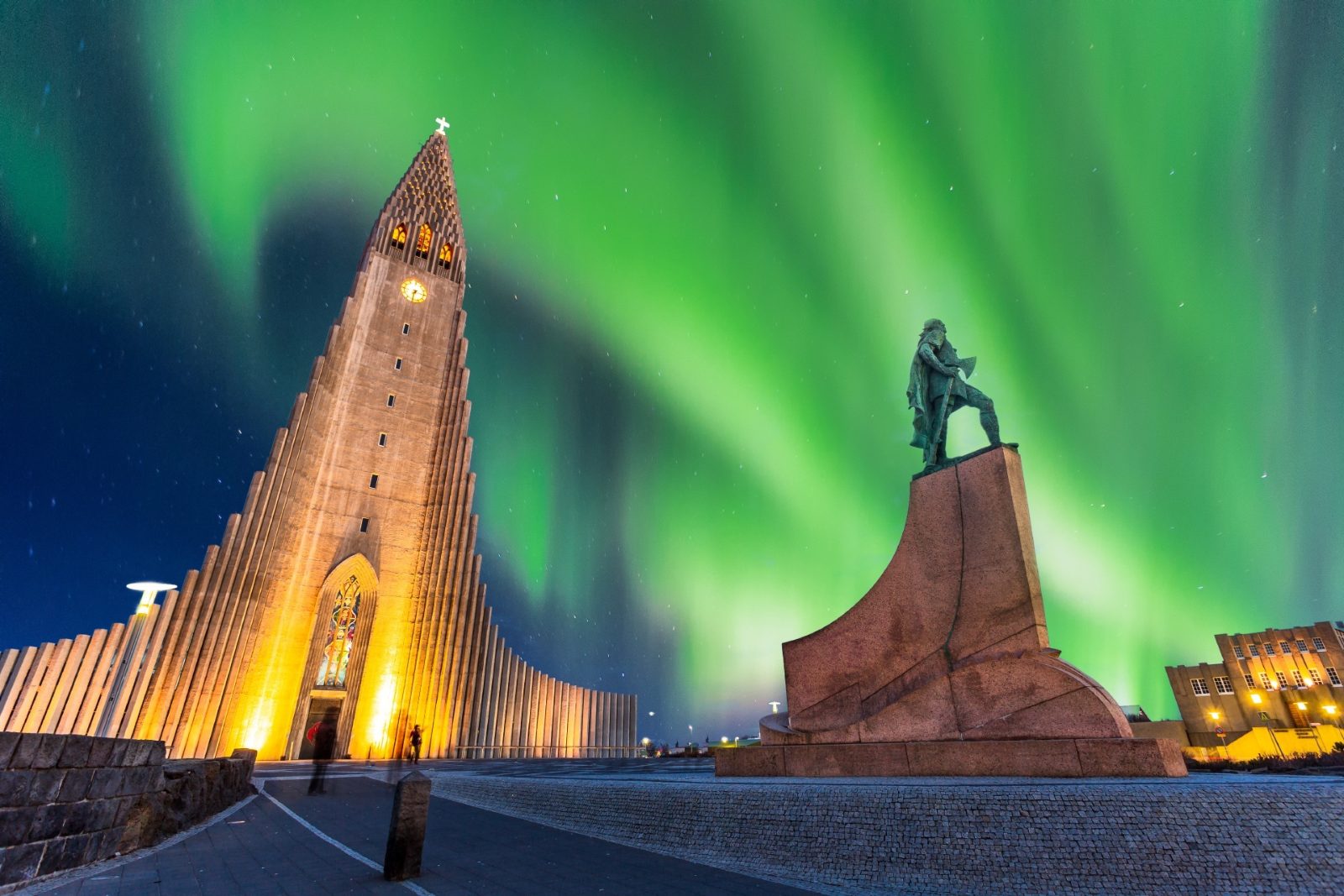
Reykjavik lies at roughly 64 degrees north, almost the same latitude as Fairbanks and Nuuk, which places it directly beneath the band of sky where charged solar particles collide with the upper atmosphere. That geography is the city's single greatest advantage, and it is the reason a capital of around 140,000 people gets written about alongside far more remote aurora destinations. Whether is reykjavik good for northern lights, then, is less a question of position than of interference — the same streetlights, harbour floodlights and shop windows that make the city liveable also raise the threshold a display must cross before the eye registers it. That threshold matters more than most visitors expect. A strong geomagnetic storm will read clearly from Laugavegur; a modest one will not survive the glow of Kvosin. The practical consequence is that Reykjavik functions best as a base rather than a viewing platform. Grótta lighthouse on the Seltjarnarnes peninsula, the shoreline at Sæbraut beside the Sun Voyager sculpture, and the open ground around Öskjuhlíð all sit within the municipal boundary yet turn their backs on the brightest sources. Ten or fifteen minutes of walking is often the difference between a faint grey smear and a defined green arc. The second variable is the one nobody can book around. Iceland's weather is Atlantic and restless, and cloud cover defeats a solar wind forecast every time — the Icelandic Met Office at vedur.is publishes both the aurora activity scale and the cloud map, and experienced watchers read the second before the first. Reykjavik's compactness helps here. Because the road network fans out from the city in several directions, a clear patch reported forty kilometres east or south is reachable in under an hour, which is why northern lights cruises from Reykjavik and land-based aurora tours both work from the same harbour and the same nightly forecast. The honest conclusion in any is reykjavik good for northern lights guide is that the city rewards patience and repetition rather than a single scheduled evening. Visitors who treat aurora viewing as a standing option across three or four dark nights, checking the forecast each afternoon and being willing to move to a darker shoreline, see the phenomenon far more often than those who commit to one night and hope. Reykjavik landmarks make an unusually good foreground when it does arrive.
“Reykjavik works best as a base rather than a viewing platform — ten minutes of walking separates a grey smear from a defined green arc.”
The Northern Lights are a natural phenomenon occurring in the atmosphere, meaning there is no admission fee to view them. Costs associated with observing the aurora arise only if you choose to book professional guided transport or excursions.
Verdict: Viewing the aurora independently costs 0 ISK, while total expenditure fluctuates based on whether you opt for paid guided excursion services.
Reykjavik serves as the primary gateway for aurora viewing, though light pollution in the city center necessitates travel to darker peripheral areas. Access to these locations is best achieved by moving away from the urban core toward coastal or inland viewpoints.
Route 41 or Route 49 toward outskirts
Strætó lines departing Hlemmur or BSÍ
Departure from Reykjavik Old Harbor
For the best conditions, monitor the official site at https://www.vedur.is and target arrival at your chosen location between 22:00–02:00 to align with the optimal darkness window.
Aurora viewing near Reykjavik rewards preparation, so work through these steps from the weeks before your trip down to the hour you head out.
Most failed aurora nights in Reykjavik come down to two errors: standing under streetlights and skipping the cloud forecast. Both are avoidable before you leave your accommodation.
Watching from a lit downtown street or hotel window
Light pollution washes out all but the strongest displays. Move to an unlit spot away from streetlights, or join a boat or coach trip that carries you clear of the city glow.
Checking only the aurora forecast, ignoring cloud cover
Solar activity means nothing under thick cloud. Read the cloud cover map on https://www.vedur.is alongside the aurora scale, and pick the direction with the clearest sky.
Assuming a KP number alone guarantees a sighting
Treat the aurora index as one input among several. Clear sky, full darkness, and an unobstructed northern horizon matter just as much.
Giving up after ten or fifteen minutes outside
Aurora activity comes in bursts with long quiet gaps. Stay out through the 22:00–02:00 window rather than judging the night on one glance.
Letting eyes stay adjusted to phone screens
Bright screens reset your night vision for several minutes. Dim your phone fully or put it away so faint arcs become visible.
Booking the only clear-sky night as your last night
Aurora viewing is weather-dependent, so leave spare nights. Plan your attempt early in the trip and keep later nights free as backup.
Everything you need to know about is reykjavik good for northern lights
Yes, is reykjavik good for northern lights hunting because it serves as a central hub for excursions into the darker countryside. Many visitors use the city as a base to access coastal areas where solar activity is more visible against the dark sky.
While major city landmarks create light pollution, sightings are possible from the outskirts or the coast. Generally, experienced guides recommend moving away from urban glare to maximize the clarity of the solar phenomenon.
The best arrival window for aurora activity is 22:00–02:00, which provides the optimal darkness required for visibility. Monitoring local forecasts at the official site is essential for planning your viewing session.
No, there is 0 ISK entrance fee as this is a natural phenomenon. You do not need to purchase a ticket to watch the aurora itself, though organized tours may have costs for transportation.
Light pollution from the city makes it difficult to see faint displays of the aurora. Seeking darker skies further from urban infrastructure is the most effective method for high-quality observations.
Many photographers find that is reykjavik good for northern lights trips because of the professional transport options available to dark sites. Accessing these locations allows for clear captures of the night sky without interference.
Visitors often rely on organized bus or boat tours to escape city glow. These services provide direct transport to remote locations where the geomagnetic activity is more pronounced.
Both options are valid depending on your preference for comfort and accessibility. Whether you choose a boat or a vehicle, ensuring you reach a dark environment is the main factor in success for when is reykjavik good for northern lights travel.